Problem Clarity
Are you solving a problem the intended customer considers important enough to address now?
The ROVEN Decision Pressure Test
Ten questions to answer before committing to a healthcare launch, expansion, AI investment, or growth initiative.
This free diagnostic helps healthcare leaders identify the assumptions, evidence gaps, adoption risks, and operational vulnerabilities that may be carrying a consequential decision.
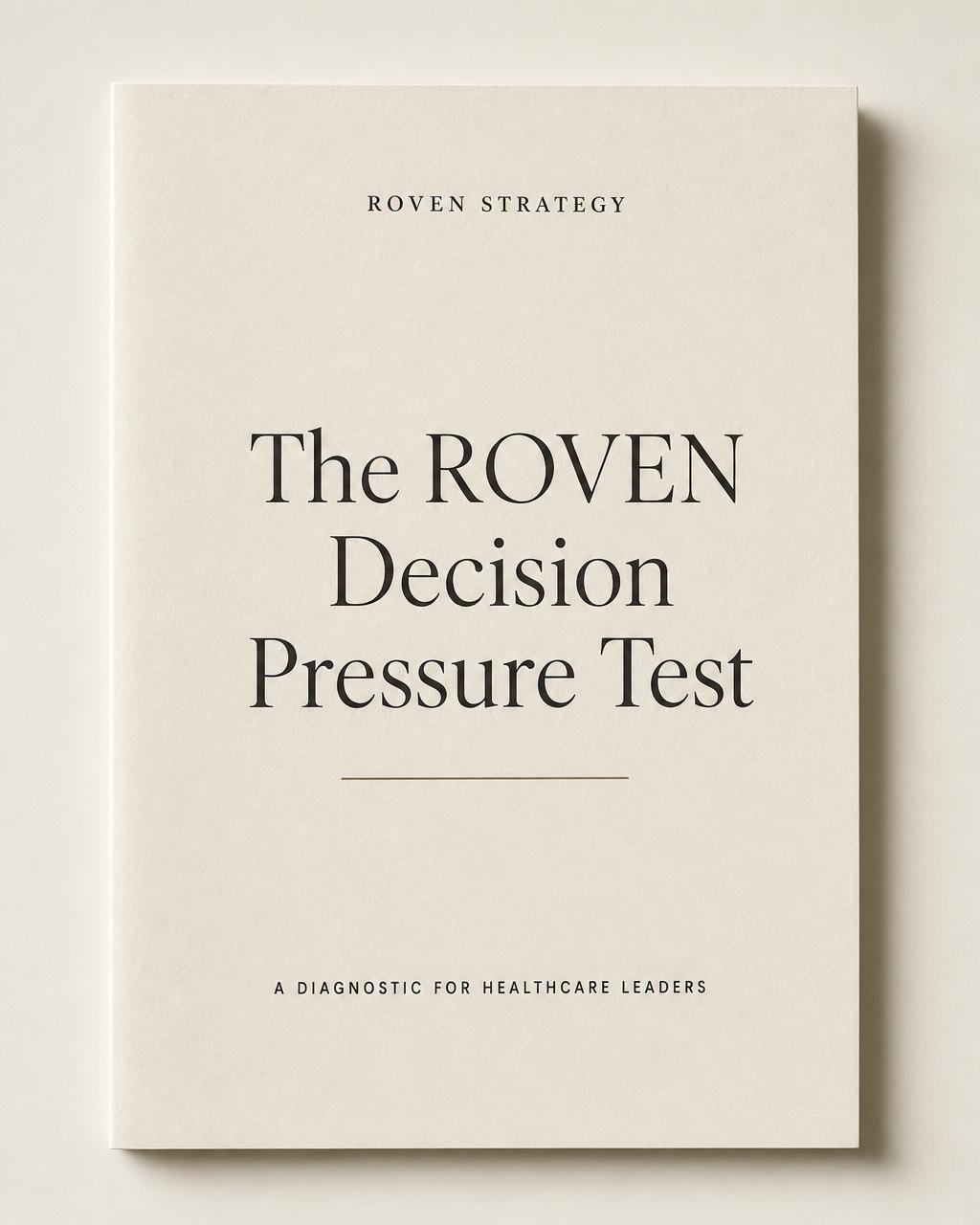
The Pressure Test helps you evaluate whether the decision is supported by evidence or being carried by assumptions that have not been sufficiently challenged.
Are you solving a problem the intended customer considers important enough to address now?
What have customers, clinicians, patients, or operators actually told you?
Which assumptions must be true for the strategy to work?
What must change once the plan reaches the people expected to execute or adopt it?
Can buyers and frontline teams understand the value clearly enough to make a decision and act?
What could cause the strategy to break once it reaches the real world?
Use the Pressure Test when your organization is considering:
Score the decision using the evidence available today, not the evidence you expect to collect later.
Differences between leadership and frontline scores may reveal important execution gaps or assumptions.
Pay particular attention to questions scored zero or one and to areas where the consequences of being wrong are significant.
The total score matters. The pattern behind the score may matter more.
Enter your information below and the diagnostic will be sent directly to your inbox.
By requesting the diagnostic, you agree to receive the ROVEN Decision Pressure Test and occasional insights from ROVEN Strategy. You may unsubscribe at any time.
ROVEN Strategy helps healthcare leaders pressure-test consequential decisions involving growth, commercialization, expansion, technology, and innovation.
The work begins by clarifying the problem, identifying the assumptions carrying the plan, examining the available evidence, and determining what could fail when the strategy reaches clinicians, employees, patients, customers, or the market.